Business Benefits of Corporate Social Responsibility

This week, I’d like to share my 5-minute elevator pitch on how Corporate Social Responsibility can be used as a successful marketing instrument for company branding, talent development and building better client relationships. The link takes you to You Tube.

I’m repeating some of the business benefits below, which I communicated in my blog a few weeks ago, The ‘profit’ in non-profit.

WIN 1 – Training & development: By working closely with HR and Training, you can create exciting training and development programs which answer the learning needs of your young talents and senior executives, while they are giving something back to the community. So, where Community Investment & Involvement (CI&I) is often seen as a cost, you can start turning it around as a long term learning benefit for your young talents and executives, since getting involved in the community develops soft skills, among others.

WIN 2 – Improving client relationships: Invite your clients to join you in your CI&I initiatives. Your staff members not only give something valuable back to the community i.e. knowledge and expertise but, they are also given the opportunity to forge relationships with their clients in an informal setting. This blows the idea out of the water that CI&I is a waste of time and money. Since when was client face-time a waste of time and money?

WIN 3 – Creating brand ambassadors: I’m often amused to hear how many of my colleagues tell me that they get involved in the community with the idea that they have a lot to teach, however, they come away having learned so much more. These staff members are positive, motivated and excited and brilliant brand ambassadors for any company.

WIN 4 – Improving the economy by helping NGOs: Your company may be able to help charitable third parties with the knowledge and expertise of your staff members. Offering advice which these NGOs may otherwise not have been able to afford. In the case of Fair Chance Foundation, we’ve developed financial literacy programs that we implement in schools by training-the-trainer (the teacher) or by giving interview skills training and lessons in entrepreneurship, etc. to students. We’ve chosen topics that are close to our core business and therefore, easier to teach. Our view is that the more we invest in education, the more of a virtuous circle that we create. The longer children stay in school and get a better education, the less likely they are to knock on the door of social welfare (where available) or be dependent on their families. Instead, it’s our hope that these children will be educated enough to be able to find work, or to become entrepreneurs. And when more people work, the economy becomes better, which is automatically better for business.

So Community Investment and Involvement (CI&I) is beneficial for business and is positive for the brand, talent and leadership development and for improving client relationships. Don’t get involved if you want to make a fast buck. But if you’re in it for the long run, the spin-offs are extremely ‘profitable’ for your business but even more so for the NGOs that you help.
Creating the best school for the Netherlands and the world

I met Marcel Kampman recently. He was born, lives and works in a small town, 130 kms from Amsterdam, Meppel. This week I learned that Marcel is a father of two. His dream is that his children will be inspired to achieve brilliance by the teachers that teach them, the curriculum that they are taught and by the schools that they attend. A dream that I share for children around the world. But he also realises that this may be a pipe dream since it’s a scientific fact that children are far more creative at the age of 4, a whopping 98%; than at the age of 18, a depressing 2%. Sir Ken Robinson’s book, The Element: How finding your passion changes everything and TED talks reveal that schools actually stifle creativity instead of nurturing it. Seemingly, when we start school, we’re at our fullest potential but, each time we make choices, we leave ourselves fewer and fewer opportunities, which slims down our potential when we finally complete our education. “The more you choose, the more you lose.”

With this in mind, what if you could reinvent a school from scratch? What would you change? How would the technologies that reinvent education impact the construction and design of the building? How and what would you teach? Unlike many before him, Marcel Kampman has stood up to the challenge and Dreamschool Foundation and Project DreamSchool was born in the Netherlands. He’s now spreading the word at Lift and TED, gathering opinions and ideas and reinventing schools. Watch his presentation at Lift.

And, let’s face it, creating anything new in schools is a scary task. There’s that break with tradition and everything that’s governmental and bureaucratic. The project innovators of Dreamschool are ‘making it up as they go along’, since very little they think about, has been done before. They do have help from brilliant minds around the world though e.g. Sir Ken Robinson.

Am I curious as to where it will end up? Yes, sure I am! Do I believe it can work? Yes, I do. The biggest dreams start with the most ordinary people. What makes these people different, is that they dare to try. The stone age didn’t end due to a lack of stones you know. So, perhaps the age of classical education ends here! You can follow Marcel and the activities of Project Dreamschool on his website or you can follow him on twitter.

Teaching 9 year olds about Social Media

This week, Fair Chance Foundation hosted its annual Impact Day. This is when every Deloitte employee around the world gets to trade 8 hours of regular work to volunteer in the community. In the Netherlands, we hosted Impact Day on Wednesday, 28th September. We facilitated 38 educational projects with a reach of over 2000 students. All made possible by more than 400 Deloitte employees and excellent community partners. Click here for an impression of the day.

I visited 3 projects on Impact Day, but I have only one favourite and admittedly it’s a project which I wrote about in August. Linda Vonhoff and Thijs van de Reep of Social MediaWijs hosted a social media boot camp for 9 and 10 year olds along with my social media colleagues, Roos van Vugt and Jochem Koole and an enthusiast from our recruiting department, Berend Buitink. The boot camp teaches young kids all the fun things that they can do with social media and the internet as well as highlighting some of the evils.

The primary school, at which this social media boot camp was held, is situated in a less privileged neighbourhood of Amsterdam. The kids that attend the school don’t all own computers at home and they were absolutely thrilled to be able to use an ipad ‘of their own’ for the morning.

What an experience! A classroom full of extremely eager children, learning about the use of Twitter, Facebook, Hyves, Google and YouTube. With funny animal films and Mr. Bean being the hit of the day! The children not only learned about the good, but also about the ugly on social media sites; that not everyone on the web is good and honest and not everything you read is true.

Congrats to Apple though! Ipad is so totally intuitive that the kids all breezed through the lesson with absolutely no problems at all. Some of the kids quickly realized that it wasn’t even necessary to search for a site through Google since the Apps were available on the homepage.

When I was growing up, I never paid much notice to the neighbourhood that we lived in, the schools that I attended or the ‘other things’ that I probably took for granted. It’s my guess, that these kids don’t either. And, let’s face it, you don’t need ‘things’ to be a really bright kid. And, each and every child in that classroom was an absolute gem.

Thijs and Linda are back at the school next week to run through the next module, I have a feeling that the atmosphere may be slightly more subdued since the lessons are sans Apple. However, I’m sure the content will keep them mesmerized. If you want to learn more about Thijs and Linda’s techniques, please contact them through twitter or through their website www.socialmediawijs.nl. Although their program is in Dutch, I’m sure they’d be thrilled to roll it out in English for you.

Many, many thanks go to Anne-Marie de Jeu, the Manager of Fair Chance Foundation. What a project manager!  Due to her total professionalism, Impact Day 2011 was an enormous success again this year. Thank you!

The ‘profit’ in non-profit

This week I met with one of my peers from a global company based in the Netherlands. She’s been running a community involvement program for the past 5 years and wanted to gain some insights from me as to how we run the Fair Chance Foundation. I was flattered that she’d reached out to me and also thrilled to be able to share knowledge and where possible best practice. Especially since our Foundation has only been around for a year, having launched in September 2010. We parted having shared many stories, some frustrations and numerous highs and lows. In view of this meeting, I’d like to share with you some of my views on how profitable organisations can remain profitable, whilst helping charitable third parties to greater new heights.

During the past year, it has become more and more clear to me that Community Investment and Involvement (CI&I) cannot be seen as something that is separate from the company strategy. Any business strategy includes brand, people and clients and CI&I is no different. What the past year has also taught me is that non-profit activities which businesses invest their time and resources in, are allowed to be ‘profitable’ in the perception of the business, whilst still benefiting the non-profit third parties. When a smart CI&I strategy is defined it will be beneficial for all parties!

Let me explain my thought process and let me use the Fair Chance Foundation in the Netherlands as my example. Fair Chance Foundation is financed by Deloitte and focuses on improving education of underprivileged children (age 6 – 18), predominantly in the Netherlands. We partner with well-known charitable third parties and invest resources (money), time (hours of our consultants) and expertise (knowledge of our employees) to ensure that we have the most impact. We don’t want to ‘window dress’ and buy a clear conscience. We want to really be involved with projects at grass roots level, with our own people.

What I see happening is the following. More and more young talents want to work for companies that invest in the community and students, are now looking at Deloitte as an employer of choice. Clients that hear about our foundation are suitably impressed. A client CEO said, that consultants who are involved in the community, are better at what they do, since they really understand the drivers and limitations of the economy. And, better client relationships, lead to better business and improved brand perception.

But, I’m driven by new ideas and what we’re not doing….so my thought process goes even further than the above.

WIN 1 – Training & development: By working far closer with HR, training and talent, exciting training and development programs can be developed that speak to the learning needs of our talents and professionals, while they are giving something back to the community. So, where CI&I is often seen as a cost, we start turning it around as a long term learning benefit for our talents and professionals.

WIN 2 – Improving client relationships: My next trick is that we include our clients. Not all of our clients run foundations or do they have the time or resources to get suitably involved in the community. However, they would like to become involved. By opening up the doors to our company CI&I program, we can send our own talents and professionals on a community involvement learning journey along with their clients so that they can use the time, not only to learn, but also to forge relationships with their clients. This blows the idea out of the water that CI&I is a waste of time and money. Since when was client face-time a waste of time and money?

WIN 3 – Creating brand ambassadors: I’m often amused to hear how many of my colleagues tell me that they get involved in the community with the idea that they have a lot to teach, however, they come away having learnt so much more. These colleagues are positive, motivated and excited and brilliant brand ambassadors for any company.

WIN 4 – Improving the economy by helping NGOs: Charitable third parties are helped with knowledge and expertise that they may otherwise not have been able to afford. In the case of Fair Chance Foundation, we’ve developed financial literacy programs that we implement in schools by training-the-trainer (the teacher) or by giving lessons in interview skills training, entrepreneurship, etc. Topics that are close to our core business and therefore, easier to teach. My view is that the more we invest in education, the more of a virtuous circle that we create. If more children stay in school longer and get a better education, they will not knock on the doors of social welfare (where available) or be dependent on their families. Instead, they will have enough entrepreneurial skills to start their own businesses or the right education to find work. And when more people work, the economy becomes better, which is automatically better for business.

So Community Investment and Involvement (CI&I) is positive for the brand, talent and leadership development and for improving client relationships. Don’t get involved if you want to make a fast buck. But if you’re in it for the long run, the spin-offs are extremely ‘profitable’ for your business but even more so for the NGOs that you help.

I’m getting off my soap-box now. Food for thought…….. I certainly hope so. I look forward to hearing your opinions on this subject!

Making every day count

This is my first week back at work, after a two week vacation, and it’s full steam ahead. My week has flown past but, I feel I’ve made every day count.

On Monday, I met with Amor Strauss from Cordaid Urban Matters. Amor focuses on projects in Cape Town, South Africa. Cordaid Urban Matters creates opportunities by bringing together existing initiatives and ideas of civil society, government and the private sector. By joining hands the impact of individual projects can be increased, bringing real change to the lives of the slum dwellers.

On Wednesday, I presented the Deloitte Fair Chance Foundation’s activities at Frismakers. Frismakers offers a platform for innovative managers to share best practice. Since we’ve shifted from corporate social responsibility to corporate social involvement, it’s no longer good enough for companies to just offer money, do some window dressing and buy a clear conscience, where community investment is concerned. It’s now all about investing time, knowledge and funding and reaping what you sow. As, it’s also my belief that there’s a lot to be gained by the corporate world in brand visibility, brand ambassadorship, people development and client relationship building through focused community investment.

I ended my week today, with an inspiring meeting with Cosmas Blaauw from SharePeople. Cosmas exchanged his career for his life’s work in 2004. SharePeople connects social entrepreneurs in developing countries with European corporate professionals. By sharing knowledge locally on specific business cases, the entrepreneur is empowered to strengthen the business and create jobs & livelihoods for the community. Through this experience both parties develop themselves personally and professionally, and inspire each other. SharePeople has supported businesses in Kenya, the Philippines and India, just to name a few countries. How can you or your organisation become involved and share your knowledge?

“In the words of Diane Ackerman, “I don’t want to get to the end of my life and find that I have just lived the length of it. I want to have lived the width of it as well.”

I hope your week was as inspiring as mine! Namasté.

Hungry for life

2011 is a year to revisit many beautiful places I’ve been before. Places that I love. Cape Town, Hong Kong, Barcelona, Umbria and Tuscany. Revisiting places I’ve been and love is liberating. There’s no rush to explore the sights, to photograph the vistas and stop at every village en route. It’s all about enjoying the moment, taking in the sights with your eyes (not through a camera lens) and stopping to smell the roses. Or in my case, the smell of lavender, red African dust or Asian spices.

Whether travelling for business or for pleasure, I always find the time to really enjoy where I am; to get to know the locals; understand the customs; practice my, less than proficient, language skills; visit spots off the tourist map; delve deeper into the culture and the history.

Revisiting countries also gives me the time to chat to fellow hotel guests and hear how they are changing the world. For me, the UN’s World Food Program now has a face. Two inspiring ladies, passionate about the work that they do. “Developing simple solutions that have far reaching impact.” Josette Sheeran, executive director at the WFP told me about her recent visit to drought-stricken Somalia and the lives that are being saved; the programs being rolled out by the WFP to ensure that girls can remain in school until they are 16 years old and their father’s don’t marry them off much younger for a dowry; and she spoke about her visit this week to just some of the WFP’s partners in the Netherlands, TNT, DSM and Unilever. Because, without partners and funding a number of projects just wouldn’t get off the ground.

My most common saying on a really busy day is, “I’ll be doing all of this, and I’ll be solving world hunger before breakfast.” Said in jest of course, as for me this is unattainable. Having met Josette, I’m thrilled that she’s with an organisation that stops at nothing to ensure that this happens. Josette recently presented at TED in Edinburgh where she spoke about why, in a world with enough food for everyone, people still go hungry, still die of starvation, still use food as a weapon of war. Her vision: “Food is one issue that cannot be solved person by person. We have to stand together.” Watch her talk about “Ending hunger now” on TED.

Travelling helps me regain my equilibrium, to reset my brain and to appreciate all that I have in my life. I travel to beautiful places, I meet extraordinary people and I get to eat culinary delights. I eat regularly and I seldom feel hungry, unlike many people that the WFP helps around the globe. I doubt I’ll ever be able to ‘quench my thirst’ for global travel or ‘still my hunger’ for new experiences. But, whereas I’m hungry for life, there are still too many people around the globe that are just plain hungry. Since every penny counts, please read about the WFP’s initiatives and see how you can help.

You only live once, but if you live right, once is enough.

If you’ve been reading my blogs, you’ll not be surprised to read that for me, absolute bliss is driving on the German autobahn (highway). A country where speed limits are determined by the driver and the fast lane has been ‘bought’ by Audi, Mercedes and BMW, as these are the only cars that you see speeding along in this lane. This is where my love for very loud music can be paired with high speeds without the concern of speeding fines. My ‘other half’ is now deaf but he’s convinced that I was a racing driver in a previous life or that I’m in training.

‘Hurry, hurry, hurry, now quick, quick, quick…just step on the gas ‘cos I don’t wanna miss this.’ We’re not speeding because we’re in a rush to get somewhere. We have all the time in the world. We’re driving at high speed because we’re having fun. I guess, it’s not about the speed of the activity, but whether you’re actually taking the time to enjoy what you’re doing.

The old addage, ‘charity begins at home’, has taken on a new meaning for me. Perhaps it really means that if you start with yourself, have fun and enjoy your life, then you’re in a better position to be nice to the world around you.

So, start enjoying those magic moments in your life. Be nice to yourself, spoil yourself and when you’re sufficiently happy, take the time to:
listen……yes really listen…..to the people that you meet;
enjoy the silence;
say something nice to someone and actually mean it;
look into someone’s eyes when you’re talking to them;
take in the view around you;
do something for someone without expecting anything in return…..unconditional giving;
donate time or knowledge or money to a charity of your choice;
etc……..

And remember, “You only live once, but if you live right, once is enough.”

Giving is all we have

My grandmother was born in 1901. As a child, I remember her telling me that there weren’t many men around after World War I and so it was quite a long time before she met my grandfather and started a family. Perhaps this is the reason why she was so hard working and made sacrifices to ensure that her family was always very well cared for. Not only did she care for her own family, she was always looking out for other, less fortunate, people in the community. She was not rich by today’s standards however she had enormous wealth, which she shared with everyone she knew. I’m proud to say that I’ve only ever met people that loved and respected my grandmother. People that have told me stories of how she helped them. People who were happy to call her their Aunt, their Mother or their Grandmother, even though they are in no way related to our family. By the way, my grandmother was no Saint. She had an absolutely wicked sense of humour and with a twinkle in her eye she would regularly remind my grandfather that she’d only married him because of the dire shortage of men after the war. She died when she was 94 and was only ever married once. I guess this says it all. An absolutely remarkable woman!

A few months ago I met Jeroen Timmers during a business meeting. A young man, with a great job and a brilliant career ahead of him. When I launched my blog, Jeroen emailed me and said “When I get back from my travels (which is rather soon as I fly out of San Jose to Amsterdam tomorrow!), I too have some audacious plans within the realm of ´giving´ and ´changing the world.'” A few weeks ago, he launched ‘Giving is all we have’, a platform for everyone that intends transforming our money-based economy to a society that thrives on gifting. Jeroen started the chain by gifting his own Lowlands concert ticket to a complete stranger. Not because he couldn’t attend; he loves Lowlands and never misses a concert; but because he thought it necessary to do so.

If you’re as curious as I am about Jeroen’s activities or you would like to do some gifting of your own, Jeroen is looking for some help with his website. He can be contacted at info@givingisallwehave.com. Or, do you have any ground-breaking ideas on how to change the society we live in? Send your ideas to ideas@givingisallwehave.com.

What makes individuals like my grandmother, the many people before her and Jeroen and many generations to come, carry out selfless, unconditional acts of charity? If only I could crack this code, I would bottle the DNA and sprinkle it generously around the globe.

Let’s help Jeroen make waves!

Speeding through life with Social Media

The year I was born, the world was a different place. There was no Google Plus, Twitter, Facebook or Linked-in. Let’s face it, computers weren’t even being used and we’re not even talking about the dark ages.

The top selling movie was Mary Poppins. Remember, that was before VHS or DVDs. People were watching movies in the cinema, and not downloading them online. Imagine the packed seats, the laughter and the excitement. And, all of that without 3D computer effects.

Books were still popularly read on paper, not on digital devices. Trees were felled to get the word out. The technology available today would have blown our minds. Do you know what was invented in the year I was born? The Solid-state Electronic Calculator.

I share my birthyear with people like Russell Crowe, Nicolas Cage, Sandra Bullock and Tim Owen. With Sandra on the list, somehow I feel in good company.

It’s 2011 and the world is a different place, but no less exciting. I love the idea that I can keep in contact with my family, friends, acquaintances and total strangers online.

On July 21st I made a pact with myself on Twitter. I love listening to dance music and the louder, the better. But, that’s only part of my problem. The real problem is that when I listen to loud music, I tend to drive too fast. Not fast enough to be reckless. But, just fast enough to get little traffic fines of 10 – 50 euros a pop. Amounts that I can pay with ease, so I don’t seem to learn my lesson. The pact with myself is that from now on, any time I get a traffic fine, I pay the fine and, I also pay the same amount to a charity. In this way, at least if I don’t learn to drive slower, I feel I’m doing something good.

In the past month, two charities that I heard about via Twitter, have been the lucky beneficiaries of my small donations. Jana Sanchez is running a 15km marathon this month to raise funds for the Stroke Association. Check out Jana’s fund-raising initiative on Just Giving. Heather Taylor is raising money for those who have lost everything in the recent riots in the UK, to cleanup, rebuild and look to the future of the communities she lives in and loves. Check out Heather’s #riotremedy activities on Just Giving. Remember, a little donation goes a long way.

I had fun growing up, watching movies in cinema’s, chatting on our family telephone with my girlfriends and pumping up the volume of pop music on the radio. Nothing really changes. I don’t know whether I’ll ever grow up and stop listening to loud music, so, I guess I’ll continue speeding through life. The only difference is, is that social media now helps me find worthy causes to support.

Check out what happened in your birthyear http://whathappenedinmybirthyear.com/

Who cares?

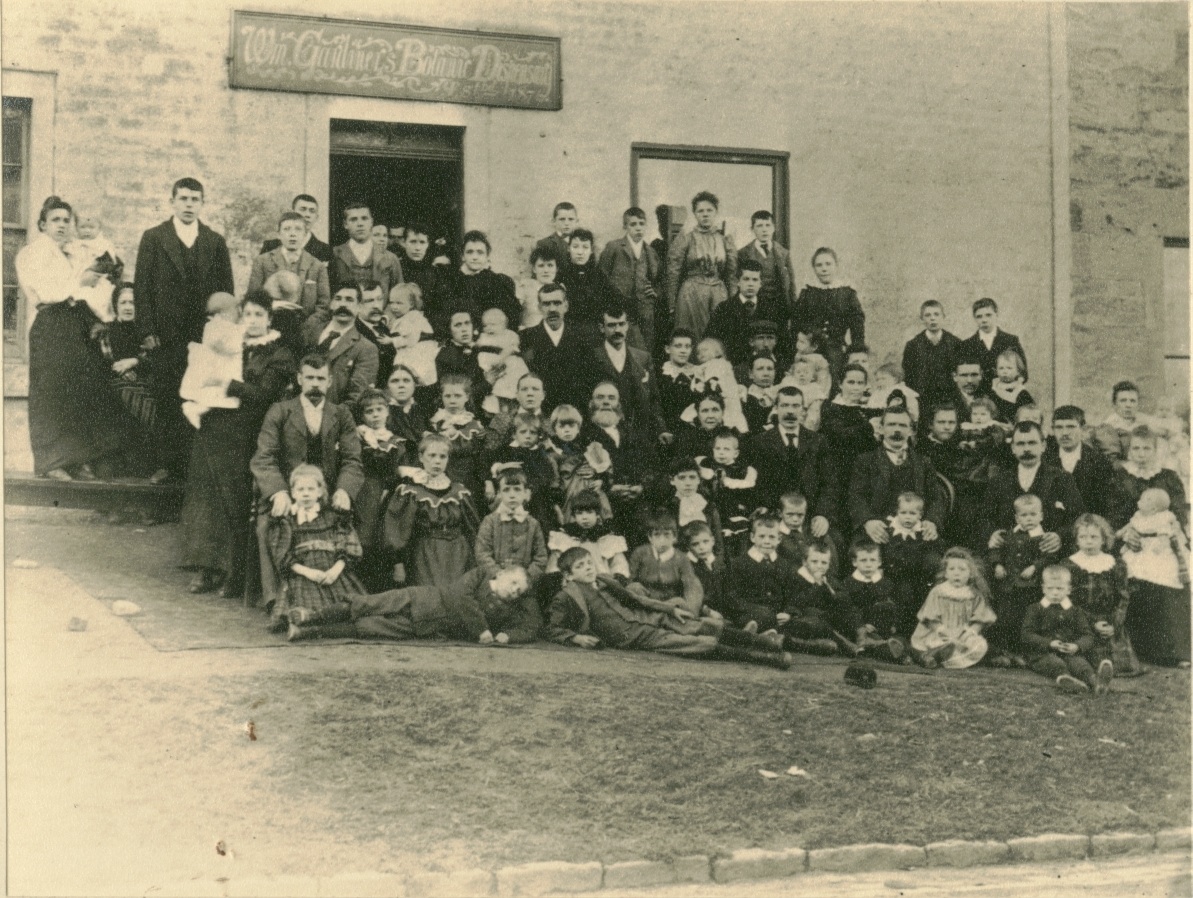
William Gardiner, homeopath, outside his botanical dispensary with his extended family. Care of Glen Gordon, my recently found extended family in New Zealand.
William Gardiner, herbalist, outside his botanical dispensary with his extended family. Care of Glen Gordon, my recently found extended family in New Zealand.
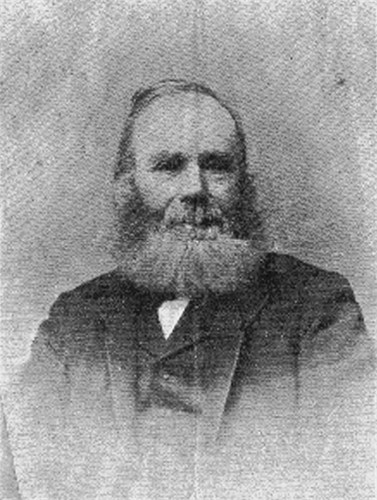
My Great great grandfather, William Gardiner.
My great-great grandfather, William Gardiner


My great-great grandfather, William Gardiner, was a herbalist in Scotland in the late 1800s. He owned botanical dispensary, not far from where my father was born.

Later my great grandfather, who had perhaps learned a few tricks from his father, ran a similar dispensary in Glasgow, albeit that he was not as practised as his father had been. The ‘shop’ was lit by gaslight and was rather dark. The walls behind the counter were lined with small wooden drawers filled with plants, herbs and spices in order to make the ‘potions and lotions’ of the day. My father and his sister were terrified to visit it as it was like stepping into the unknown. I can only imagine that the shop looked like something out of a Harry Potter film. I have vivid images of my great grandfather in a robe with white hair and a beard and resembling Richard Harris as Albus Dumbledore. However, knowing the men in my family he probably looked more like Mel Gibson in Braveheart, but unfortunately ladies, not quite as good looking.

I’m proud to say that my great-great grandfather’s daughter was smart enough to record his work. She had the common sense to realise that her father’s wealth of knowledge should be bound and published, and in 1904 “The working man’s guide to health by herbal remedies” was published; a book to be used long after my great-great grandfather had died. There is only one book that I know of in the family and it’s not in very good condition, given it has been used to treat patients through the ages. The book has been handed down from generation to generation through my family’s male lineage. So I’m not the book’s caretaker. That responsibility has been given to my brother and later will be his son’s.

Even today, medicine in all forms, whether homeopathic, alternative or traditional, is necessary in order to relieve pain or to save lives. While I was visiting Hope Village, an orphanage in Namibia, I met the CEO of the PharmAccess Foundation. It dedicates itself to the strengthening of health systems in sub-Saharan Africa with its ultimate goal to improve access to quality basic health care, including the treatment of HIV/AIDS. PharmAccess supports programs and offers services in the areas of healthcare insurance, workplace programs, health investments, health intelligence, etc.

Whereas common sense has meant that many patients have benefited from the knowledge in my great grandfather’s book, it’s the passion of employees of organisations like PharmAccess that help save lives today. Many more children in Africa would be born HIV positive and would not enjoy quality of life, were it not for the likes of PharmAccess. And, having seen for myself the work that they do, I can assure you, they do care!